
Aren't I worried about Ai taking my job?

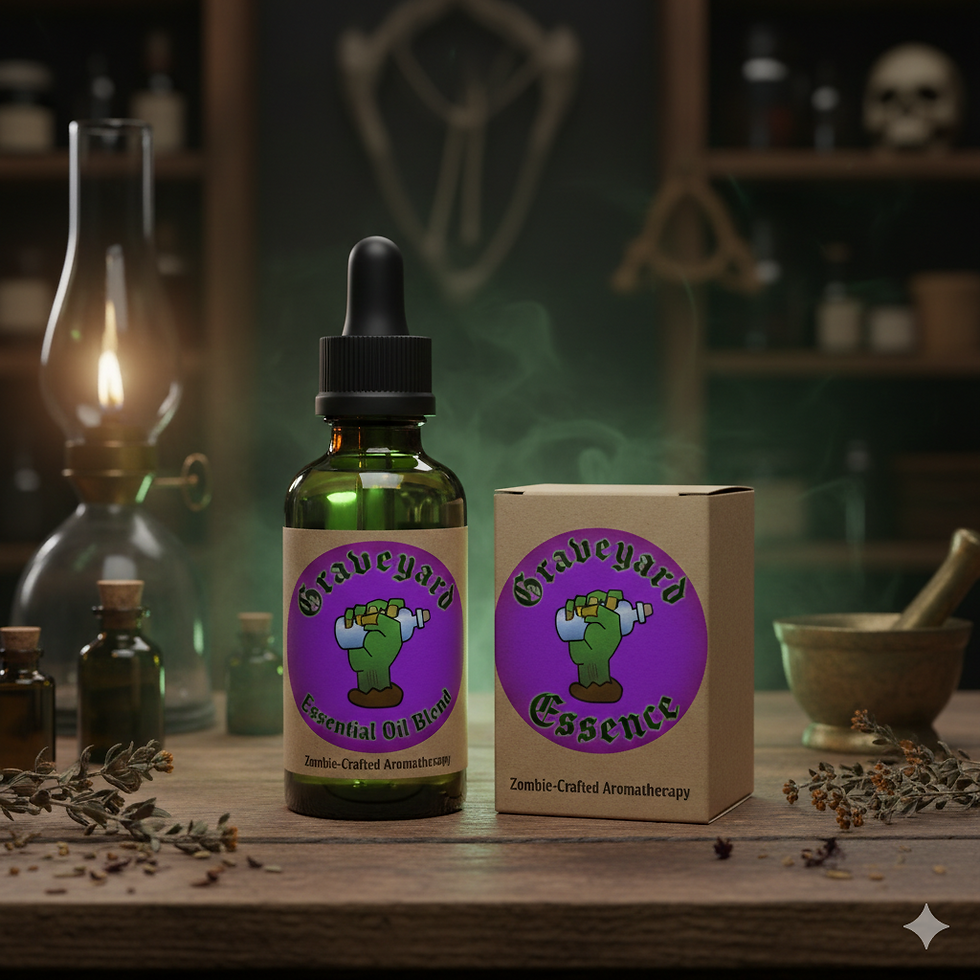
This image shows a design I created for an assignment in college. This was the final result for the mockup. I made the design on my own but used Gemini Ai to create the mockup for presentation. It still isn't perfect but it got the job done.
The Role of AI in Creative Fields: A Tool, Not a Replacement
Artificial Intelligence has rapidly transformed fields, serving as a powerful tool that enhances efficiency and productivity. In the creative fields, AI offers exciting possibilities, enabling artists, writers, and designers to explore new horizons. However, while AI can augment the creative process, it cannot replace the intrinsic human qualities that make art a deeply personal and emotional experience. I get asked all the time, "aren't you worried Ai is going to take your job?" or comments such as "you're in a dying field because ai can do everything faster and better".
The Advantages of AI in Creativity
AI has several advantages that make it an very valuable asset to creative professionals:
Speed and Efficiency: AI can process vast amounts of data and generate content at a pace that far exceeds human capabilities. This allows creatives to focus on refining their ideas rather than getting bogged down by repetitive tasks (Boden, 2016).
Data-Driven Insights: AI tools can analyze trends and preferences, which can provide valuable insights which help artists focus their work to meet market demands (McCormack et al., 2019).
Endless Inspiration: AI can generate ideas, concepts, and even drafts, serving as a brainstorming partner that can push creatives to explore uncharted territories (Elgammal et al., 2017).
The Limitations of AI in Creative Endeavors
Despite its advantages, AI has significant limitations that prevent it from fully replacing human creativity:
Lack of Emotional Depth: Art is a reflection of human experience, encompassing emotions, thoughts, and cultural nuances that AI simply cannot replicate. The human touch in art conveys feelings that resonate with audiences on a profound level. Emotion cannot be replicated through patterns and algorithms, authenticity cannot be artificial (Mäkelä, 2020).
Creative Intuition: Human artists possess intuition and a unique perspective shaped by their experiences. AI lacks this personal context, which is often crucial in creating relatable and impactful work. Often times the art that Ai creates blends in with everything else. Leaving too much creative direction up to Ai leads to the risk of your design blending in instead of standing out (Gunkel, 2018).
Errors and Misinterpretations: AI can make mistakes, often misinterpreting context or failing to grasp the subtleties of a creative vision. These errors can lead to outputs that lack coherence or originality. Ai is built on patterns with biases and faults built into the algorithm. A common mistake with Ai is hallucinating information or being caught in a loop- meaning it refuses to change a specific detail or loops the error (O'Connor, 2021).
The Synergy of AI and Human Creativity
The most effective use of AI in creative fields lies in the collaboration between technology and human skill. By leveraging AI as a supportive tool, creatives can enhance their work while retaining their unique artistic voice. For example:
Augmenting the Creative Process: AI can handle mundane tasks, such as color matching in design or proofreading text, freeing up time for artists to focus on their core creative processes (Khan et al., 2021).
Experimentation and Exploration: AI can generate variations of a piece, allowing artists to experiment with different styles and techniques without the time investment typically required for such exploration (Krebs, 2019).
Collaborative Creation: Some artists are using AI as a co-creator, blending their skills with AI-generated suggestions to produce innovative works that neither could achieve alone (Colton et al., 2012).
Conclusion
AI is undoubtedly a powerful tool that can enhance creativity, streamline workflows, and inspire new ideas. However, it cannot replace the human touch that is essential in the creation of art. The emotional depth, intuition, and personal experiences that humans bring to their work are irreplaceable. As we continue to integrate AI into creative fields, it is crucial to recognize its role as a supportive tool that complements human skill and knowledge, rather than a substitute for the unique qualities that define humanity and creativity.
Citations
Boden, M. A. (2016). Creativity and Artificial Intelligence. AI & Society, 31(3), 267-272.
McCormack, J., Gifford, T., & Hutchings, P. (2019). Autonomy, Authenticity, Authorship and Intention in Computer Generated Art. In Proceedings of the International Conference on Computational Creativity.
Elgammal, A., Liu, B., Elhoseiny, M., & Mazzone, M. (2017). Can AI Be a Creative Artist? arXiv preprint arXiv:1706.07068.
Mäkelä, M. (2020). The Role of Emotion in the Creative Process. Creativity Research Journal, 32(2), 183-191.
Gunkel, D. J. (2018). Robot Rights. MIT Press.
O'Connor, C. (2021). Errors in AI: Understanding the Limitations of Machine Learning. Journal of AI Research, 70, 1-15.
Khan, A., Wang, Y., & Zhang, Y. (2021). The Impact of AI on Creative Processes. Journal of Creative Behavior, 55(1), 1-13.
Krebs, V. (2019). AI and the Future of Creative Work. TEDx Talks.
Colton, S., Good, N., & Veale, T. (2012). Collaborative Creativity: The Challenge of the Creative AI. In Proceedings of the International Conference on Computational Creativity.


Comments